Cleaned by hand
Groundnut is winnowed and picked over on a bamboo tray. Stones and broken kernels out — they are what make oil taste bitter.
Home / Our craft
Samput started because we could not buy groundnut oil that tasted of groundnut. Six years later it is still one press, one family, forty bottles at a time.
How it started
In 2019 my mother refused to cook with the “refined” oil my father brought home, so he found a wooden ghani in Tirupur and bought it for the price of a scooter. The first batch was twelve kilos of groundnut. We gave away eleven bottles and kept one.
The name came later — samput, a small box, for the cask the oil was stored in. Nothing about the method has changed since: the press still turns at 18 rpm, the oil still goes into glass, and the date is still written by hand.
“If it needs a second ingredient to stay good, we do not make it.”
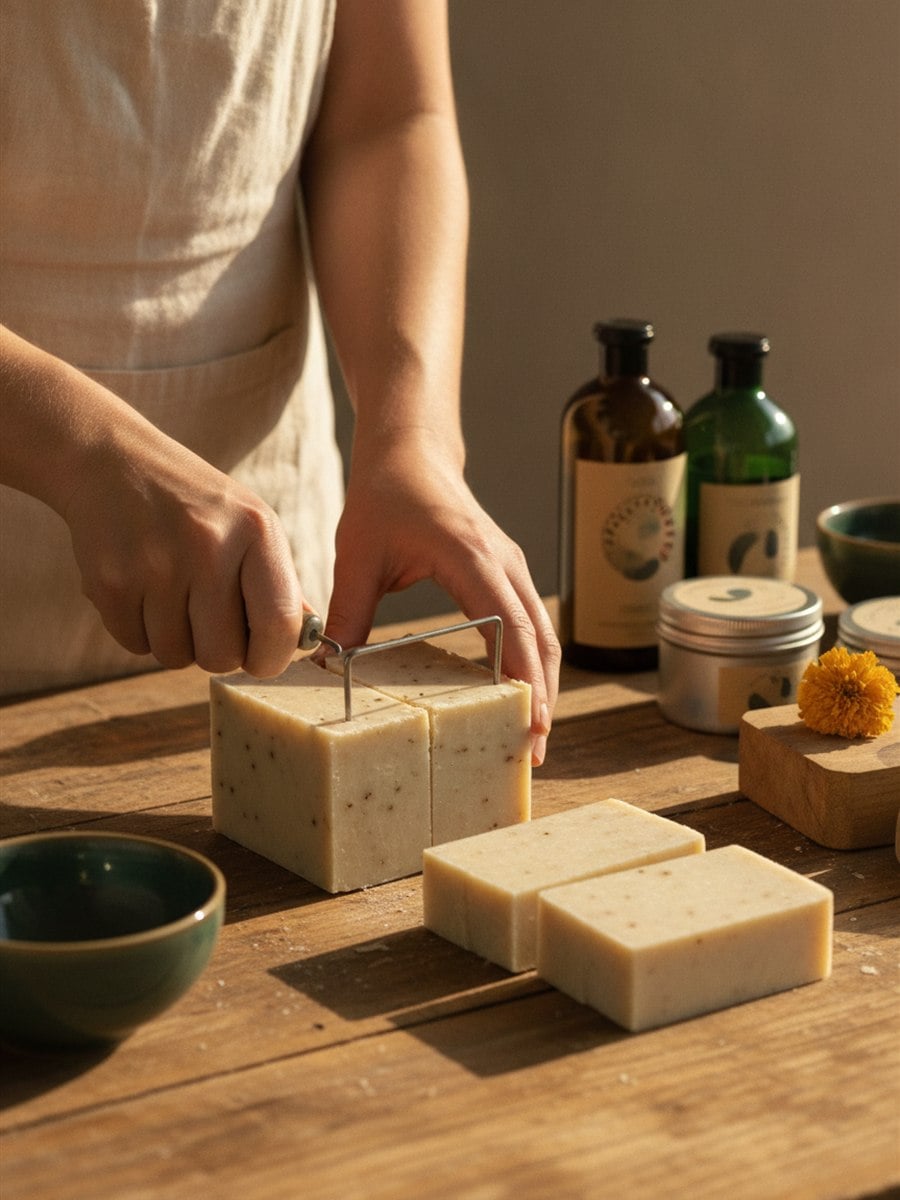
The process
No heat, no hexane, no refining. The only machine in the room is the press.
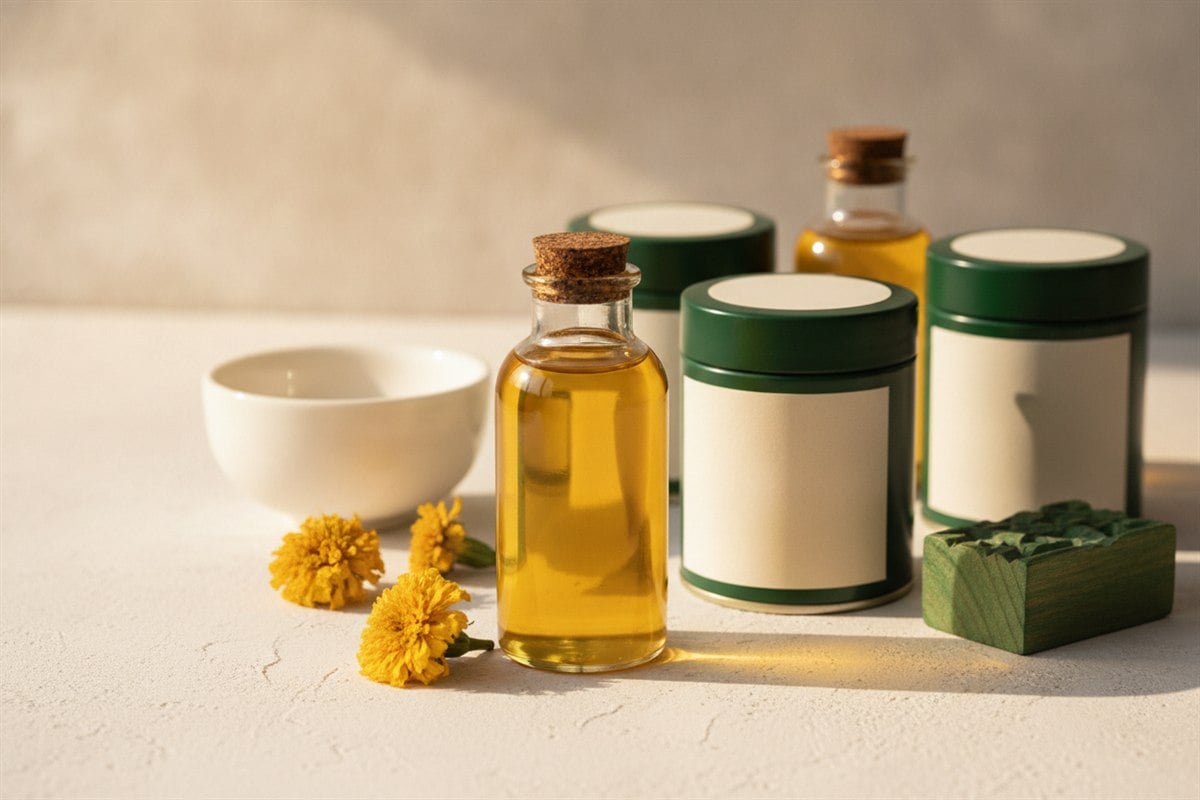
Groundnut is winnowed and picked over on a bamboo tray. Stones and broken kernels out — they are what make oil taste bitter.
Forty kilos in a wooden ghani at 18 rpm for three hours. The oil leaves the press below 40°C, so the flavour stays in the bottle.
Two days in steel to let the sediment settle, then cloth-filtered once. That is why the last centimetre of a bottle is slightly cloudy.
Glass, sterilised, filled to the shoulder. Lot number and date written by the person who filled it.
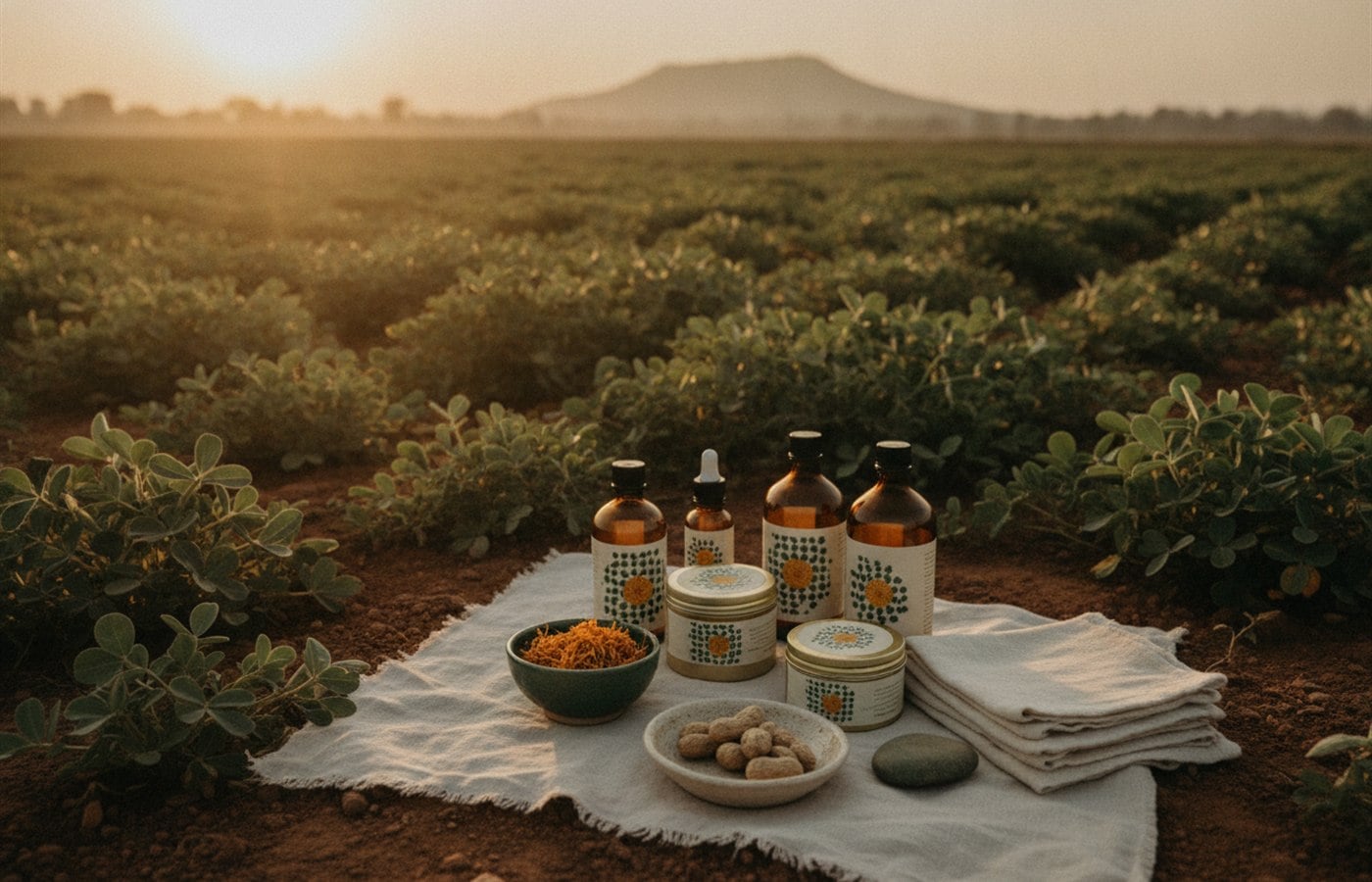
The farms
Groundnut from Anantapur, coconut from Pollachi, honey from three bee-keepers in the Nilgiris, ghee from a dairy in Erode with 22 cows. Every one of them has been visited at least twice — once in season, once when nobody expected us.
The two of us
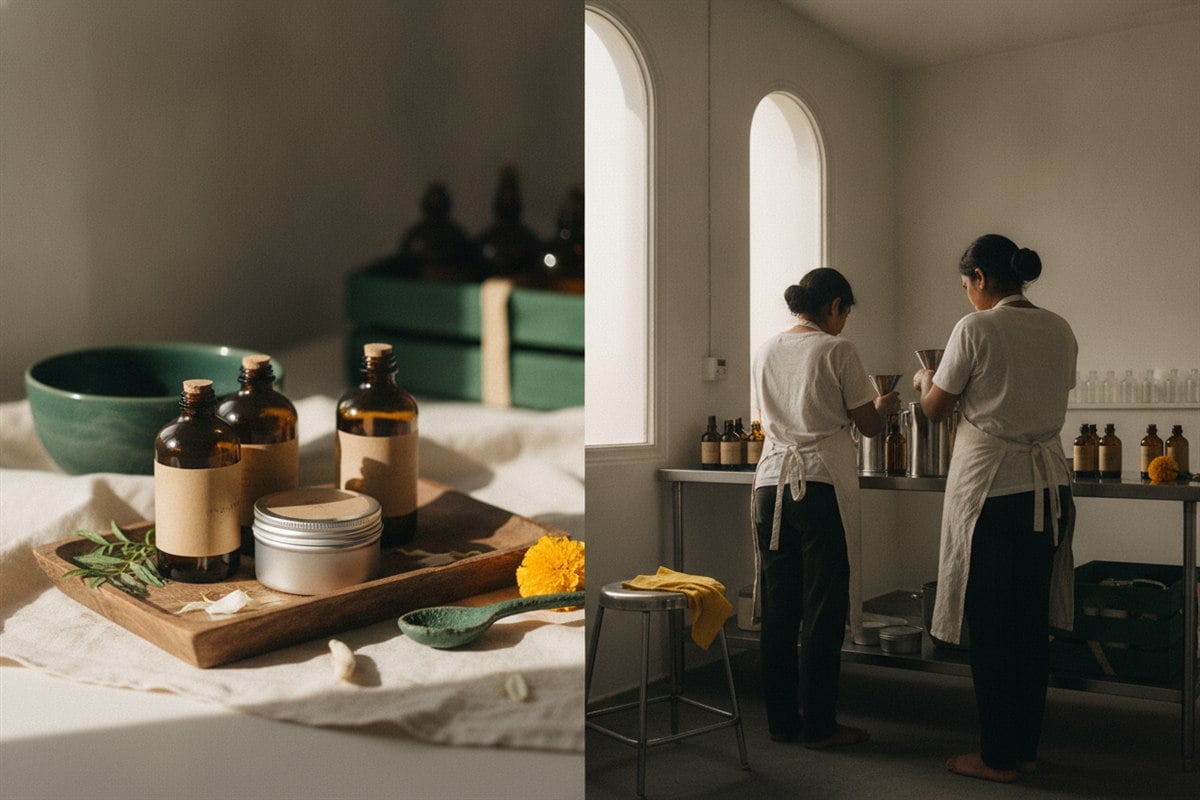
There are two part-time helpers on pressing days, and my mother, who still rejects any batch that does not smell right. We are not trying to be a big company. Forty bottles a day keeps the press honest and the prices fair.
If you write to us, one of us answers — usually the same evening.
Practical things
Because we only filter once. Cold-pressed oil keeps a little fine sediment and that is where a lot of the flavour sits. Shake the bottle before the last pour, or use the last bit for tadka.
Yes, anywhere in India. Two working days within Tamil Nadu and Kerala, up to four elsewhere. Delivery is ₹79, free above ₹999. We do not ship internationally yet.
Rinse six empties, bring them to the shop or courier them back, and the seventh refill is free. We wash and reuse them in the workshop. Caps and labels are replaced every time.
One dairy in Erode, 22 native-breed cows, milk collected the same morning. We buy it weekly and jar it ourselves. When the dairy has a bad week, we run out — that is the whole system.
Kitchens and small groceries within Coimbatore, minimum 12 litres. Gift boxes from 20 pieces with a printed card. Write to us with a date and we will tell you honestly whether the press can make it.
Visit the workshop
Watch a pressing, taste everything, bring your empty bottles. No booking needed.